
A Strategic Analysis of Corporate Conscience: The ESG Reporting Software Market
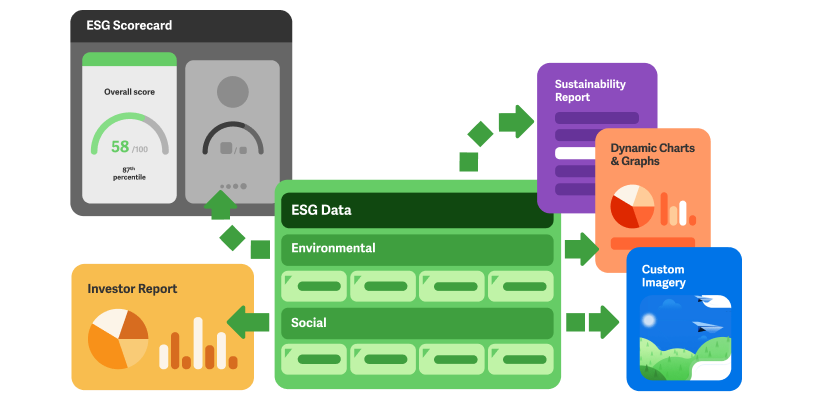
A strategic SWOT analysis—examining the Strengths, Weaknesses, Opportunities, and Threats—of the ESG reporting software market reveals a sector that has rapidly become a mission-critical component of modern corporate governance. The market's most significant strength, as any detailed ESG Reporting Software Market Analysis would show, is its alignment with powerful, non-discretionary and converging external pressures. The combination of new mandatory disclosure regulations and intense demand from institutional investors has transformed ESG reporting from a voluntary, "nice-to-have" activity into a mandatory, board-level compliance and strategic issue. This creates a powerful, sustainable, and rapidly growing demand for the software. Another key strength is the platform's ability to create a single, auditable system of record for non-financial data. By replacing the chaos of disconnected spreadsheets with a centralized, governed, and transparent platform, the software provides the "investment-grade" data integrity that is now demanded by auditors, regulators, and the financial markets. This role as the essential "ERP for ESG" is a powerful and defensible value proposition.
Despite its compelling value proposition, the market is not without significant weaknesses and implementation challenges. The primary weakness is the immense complexity and difficulty of data collection, particularly for Scope 3 emissions and supply chain data. The software can provide the tools to survey suppliers and estimate emissions, but it cannot magically solve the underlying problem: many suppliers are small, lack sophistication, and are unable or unwilling to provide accurate data. This "garbage in, garbage out" problem remains a fundamental challenge for the entire industry, as the quality of the final report is entirely dependent on the quality of the source data, much of which is outside the company's direct control. Another weakness is the still fragmented and evolving landscape of ESG standards and regulations. While efforts are underway to harmonize standards, companies still face a confusing array of different frameworks and requirements, which can make the reporting process complex and costly, even with specialized software. The implementation of these platforms can also be a major undertaking, requiring significant investment and cross-functional change management.
The market is, however, brimming with opportunities for vendors to expand their capabilities and deliver even greater strategic value. The most significant opportunity lies in moving beyond historical reporting to provide advanced analytics, predictive modeling, and strategic planning tools. The vast datasets collected by these platforms are a goldmine for AI and machine learning. The opportunity is to build tools that can forecast a company's future ESG performance, model the financial risks and opportunities associated with climate change (e.g., the impact of a carbon tax), and run "what-if" scenarios to identify the most cost-effective decarbonization pathways. This would transform the software from a compliance tool into a strategic decision-support system for the C-suite. The deeper integration with supply chain management and procurement systems is another massive opportunity. This involves creating a platform where a company's procurement decisions can be directly influenced by a supplier's real-time ESG performance score, thereby embedding sustainability directly into the core commercial operations of the business.
Finally, the ESG reporting software market must navigate a landscape of significant and evolving threats. The primary competitive threat comes from the major enterprise software giants—the ERP, SCM, and EHS vendors like SAP, Oracle, and ServiceNow. These companies are aggressively building or acquiring sustainability management capabilities and bundling them into their existing, widely adopted enterprise platforms. For a company that already runs its entire business on SAP, using SAP's integrated sustainability solution may be seen as a more convenient and cost-effective option than purchasing a standalone, best-of-breed platform, posing a major threat of commoditization. Another threat is the potential for "greenwashing" to devalue the entire process. If stakeholders perceive that companies are simply using the software to "check a box" and produce favorable reports without making genuine operational changes, it could lead to a loss of trust and a backlash against the reporting industry as a whole. Finally, the rapid pace of regulatory change, while a driver, is also a threat. A constant need to adapt to new and different rules across various jurisdictions requires continuous and significant R&D investment from the software vendors to keep their platforms compliant.
Top Trending Reports:

 English
 Arabic
 French
 Spanish
 Portuguese
 Deutsch
 Turkish
 Dutch
Dutch
 Italiano
 Russian
 Romaian
 Portuguese (Brazil)